Picohydro and Green Energy

65747d74-b39d-4f38-a4e1-bfa968393fd6.jpg

Getting green energy to the island of Tablas and to the RYE School in particular is a challenge. 

Up to this point, we have been focusing on solar energy.  Solar energy is a well documented solution that provides green energy the world over.  Getting solar energy to Tablas presents several problems.  For example, solar paneling should ideally face in a southerly direction, but the proposed site for the school faces merely faces in an approximately southerly direction.  We'd also lose a two-to-three hours of sunlight every day as the sun sets and rises behind some nearby mountains.  Getting the necessary equipment to the island would present logistical problems.

These challenges are not impossible, but will surely present some problems.

As a result, we are also looking in the possibilities of introducing a Picoyhydro system.  Picohydro involves the use of a nearby river.   The water is diverted into a pen-stock before being sent into a pipe that heads directly the mountain.  The water drives a generator before being directed back into the river.The island is very mountainous and provides the perfect setting for a Picohydro system with its numerous rivers.

The Picohydro system has the advantage of requiring very few technical items - most notably a custom generator.  All other materials required for constructing the system can be found on is island.  It also runs 24 hours-a-day, seven days a week.

The disadvantage with the Picohydro system is that it requires a civil works project.

We are about to conduct a survey of the land around the school to understand better the feasibility of Picohydro.

Once we understand the land better, we'll be in the position of deciding between solar and hydro power.

Watch this space!

RYE School Site

The site for the RYE School has been identified in the barangay (village) of Sugod..  It is a 160m2 piece land and will cost 55,000 pesos (~ $US1,145). 

At present, the land is being used for vegetable crops and the land is consequently sunken and damp.  About 10,000 pesos (~ $US 208) needs to be spent to make the land suitable for a building.   About 5,500 pesos (~$US 114) needs to be spend on legal fees which brings the total cost to 70,500 pesos (~$US 1,486.75)

All about the Local Healthcare Centers

1934578_105999076665_192934_n.jpg

The local health care centers are often the first step for locals who seek family planning advice.

The former President of the Philippines – President Estrada – officially stopped asking for family planning assistance from USAID.  One assumes that he felt that the Philippines was “developed enough” to support its own family planning norms.   This is obviously not the case in the rural areas

The Pill and the Injection – the two most common types of contraceptives given out at the Local Health Care Centers – are often in short supply.  The Health Care Center asks for a donation for the items.  This can be anyway from zero to twenty pesos for the pill, and about twenty for an injection.

When the centers run out, the ladies are faced with a tough decision: Pay for a trip to the town (anywhere up to fifty pesos) and pay an increased price for the contraception from a commercial pharmacy, or risk going “contraception-free” for the next month or so.   The relative prices are summarized in below.

Oral Contraception
Health Care Centre:      0-20 Pesos
Commercial Pharmacy: 85-90 pesos

Injectables
Health Care Centre:      20 Pesos
Commercial Pharmacy: 85-90 pesos

According to the local staff, there are no STDs on the island, and nobody gets abortions.

Many of the health care centers are in sorry state of repair.  Many lack a decent ceiling and suffer when it rains.  Many of the health care centers are also not fenced off so local people often use the center as a shortcut, which stifles any privacy the center might have.

Midwives and BHWs work at the center. 

Midwives

The midwife is responsible for much of the technical work at the healthcare centres.  “Nurse” might be a better description as they perform several public health functions.  They perform pre and post-natal checkups; distribute vitamin supplements (vitamins A and C, and iron tablets); distribute de-worming tablets and give family planning advice.

An example of some recent activity will help explain the roles.

Many of the local midwifes attended a government sponsored natural family planning seminar.   The natural methods – SDM, LAM, Calendar, BBT and Two Day Method – were discussed.  Condoms, the pill, injections and other methods that either provide a physical barrier or chemically block pregnancy were not discussed.

The midwife will pass the information unto the BHWs (see below) who will alert people living in the puroks (sub unit of village) of an upcoming talk.  The midwife will then give the talk and invite couples back to the healthcare centre for a family planning session.

A source of frustration for the midwife is couples with no access to contraception.  This might be ignorant of the methods, or refuse for religious or monetary reasons.  One of the local midwives interviewed said that she felt about 50% refused for religious reasons and about 50% refused to lack of money.  Many ladies will not pay for contraception because they feel the money is better spent on keeping their existing children healthy and well feed.

Barangay (Village) Healthcare Workers (BHWs)

BHWs are volunteer healthcare workers.   There are generally eight or so that volunteer in each barangay (village).  A typical barangay has 2,000 people.  They work under the supervision of an assigned midwife.  A midwife typically serves three barangays. 

Sources of frustration for the BHWs include travelling long distances in the mountainous area of Tablas and mothers who refuse to immunisations for their babies (as it makes the babies “sick”) and couples who continue to have more babies when they plainly can’t afford them.

The BHWs perform the following roles:

  • Help deliver healthcare info.
     
  • Help promote health initiatives.
     
  • Help malnourished kids
    The kids are often provided nutritious food. 
     
  • Limited pre and post natal care.
    They will weigh babies and other simple tasks.  The local midwife performs the more technical duties.
  • Limited contraceptive advice.
    The BHWs will often inform clients that contraceptives are available and refer them to a nurse of midwife.  The most common contraceptives given are: the Pill, three monthly injections and natural family planning methods.  Note that some BHWs don’t even mention family planning
  • Supply vitamins to pregnant females.
    A healthy mum means a healthy baby…  Sometimes the expectant mothers come to the local health care center, and sometimes the BHWs deliver the vitamins direct to their door.
  • Refer pregnant women to the midwife.
    If they see an obviously pregnant women in the community, the will record simple demographic info and refer them to a midwife for prenatal care.


Student Statistics

We want to keep our students motivated and give potential sponsors as much information as we can.

With this in mind, we are proud to release detailed information about each students.

Check out the statistics for Carlo and Encreek for some example students, or click here to view all our students.

These statistics are provided so that:

  • Potential sponsors can see the student’s academic performance

     
  • Potential sponsors can learn about the student via biographical information.
     
  • Provide a motivational tool for the students
    “Look, little Johnny has good grades and he got sponsored.  Perhaps you should study harder?”
     

At the moment, only statistical information is provided for our English students.  The stats for computer study students is coming soon.

School Supplies Donated

jyoung-ah-kim.jpg

Jyoung-Ah Kim - from Seoul, South Korea, recently visited the island of Tablas to observe the Meaningful Volunteer projects.

She was also good enough to bring along a suitcase full of school supplies that included pens, pencils, a desk-mounted pencil sharpener, notebooks and crayons.  The supplies will be used in the RYE School.

Like many other volunteers before her, Jyoung-Ah took the chance to enjoy the gorgeous beaches before heading back to Korea.


26 Apr 2009

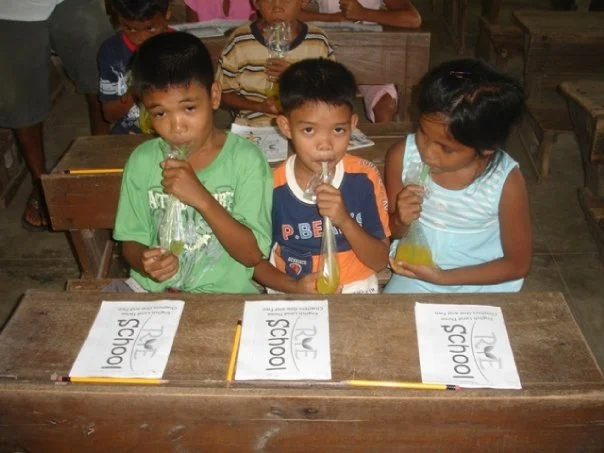
RYE School Summer Classes Underway

4196_86988621665_3969172_n.jpg

`Meaningful Volunteer is delighted to announce that its first Summer School classes are underway.

The Summer School classes serve several purposes:

  • It gives the students a chance to improve their English before the school term starts at the conclusion of the Summer

     
  • It starts some students on the path of computer classes

     
  • It gives Meaningful Volunteer a chance to run some pilot classes to see how out systems work in preparation of the opening of the RYE School proper

We currently have five classes and four computer classe

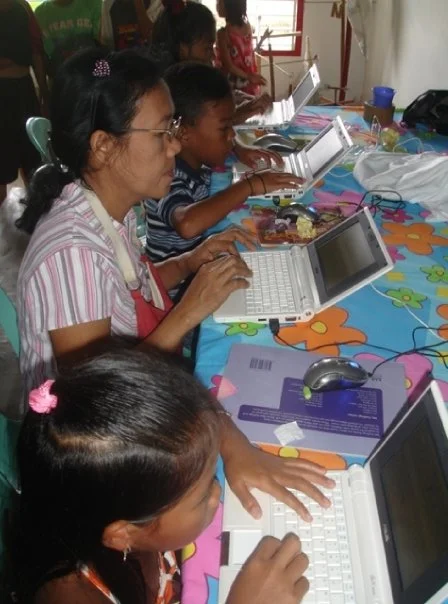
Computer Demonstration Day

demo.jpg

Part of launching any educational program requires generating some hype.  It is not different in a developing country.

On April the 2nd, Meaningful Volunteer had a computer demonstration day at Sogud Elementary School.  Anybody who had an interest in seeing the computers were welcome to come along.  The age range varied from six to fifty, and about 100 people participated.

Each participant was shown the basics of typing using a simple typing tutor program.

The two participants who had the fastest typing scores at the end of the day were awarded free Meaningful Volunteer t-shirts.

Project Lifecycle Program Outline

Project Outline

lifecycle_t.jpg

This document covers the implementation of the SDM (Standard Days Method) as part of Project Lifecycle – a project initiated by Meaningful Volunteer on the island of Tablas in the province of Romblon, the Philippines.

Background

One of the reasons that poverty persists on Tablas is the large family size.  The more children you have, the harder it is send them to school, provide them with adequate nutritional food and so on.  There are many reasons for the large family size, one of which is inadequate family planning.  Anecdotally, it seems like most people are using natural methods such as withdrawal, periodic abstinence and the rhythm method.  Family planning seems to be done haphazardly at best.  

Note: we will be conducting a survey on the island to find out what the actual reasons are and not rely on anecdotal accounts.

Project Lifecycle is looking to address these issues by the use of the SDM method and Cycle Beads.  The SDM method was developed by Georgetown University in the U.S.  The SDM method has each lady wear a necklace around her neck.  On the first day of the lady’s menstrual cycle, she places a small rubber ring on the red bead.  Each day, she moves the rubber ring around one bead at a time.  White bead days are considered fertile days, and the lady should avoid having sex on these days.  If used correctly, the SDM method is 95% effective.

The SDM method has the following advantages:

  • It has a strong scientific basis. 
    Georgetown University has done extensive research on the technique and has had many articles published in peer reviewed scientific articles.
     
  • There is a small investment by the users of the products . 
    The Cycle Beads will be priced somewhere between twenty and sixty pesos ($US 0.40 and $US 1.20).  Each necklace lasts approximately two years
     
  • 100% Natural
    It is a 100% natural method, which is compatible with many of the religious norms on the island.
     

Key Personnel

The project will be headed by Malcolm Trevena – the head of Meaningful Volunteer.  Malcolm Trevena has volunteered extensively across Africa and the Philippines.  He successfully implemented Grassroots Uganda – a non-profit organization in Uganda that teaches ladies to make jewelry from recycled poster paper.  Grassroots Uganda has approximately 100 ladies involved and had a turnover of $US 20,000 in the last financial year.  Malcolm will be based on Tablas for approximately one year

Ingrid Potgieter is also working on Project Lifecycle.  Ingrid has a strong passion for female human rights and wrote her master thesis on the overlap between female reproductive rights and the Millennium Development Goals.  She will be based on the island for at least three months. 

Vincent Embile is a Filipino who lives on the island.  He will provide logistical support.

We have also identified the following key personnel and stakeholders:

  • Nurses
    There are several nurses and health care workers working at the local community health care centers.  They all are passionate about family planning and will be among our front line workers.
     
  • Midwifes
    Each midwife on the island services three barangays (villages).  The midwives are very much in the forefront of family planning and will be a critical resource for the project going forward. 
     
  • The Catholic Church
    Approximately 75% of the island are Roman Catholic.  The Catholic Church officially endorsed the SDM method at a meeting held on January 21, 2009 – provided modern contraceptives (condoms, the Pill…) weren’t used on the fertile days.
     
  • Healthcare workers at the hospital
    The doctors and nurses working at the hospitals in Tablas are often the first people that seekers of both Family Planning and Sexual Health advice talk to.   They will be able to provide initial advice on the SDM method before referring the client to someone who can provide more comprehensive advice.
     

Funding

Meaningful Volunteer is an NGO that creates projects aimed at alleviating poverty, and promoting human rights.  It provides volunteers with meaningful projects to be involved in, one of which is Project Lifecycle.  

Each volunteer pays a fee to be involved in the project (see www.meaningfulvolunteer.org for more details).  Some of the fee goes to administration; some of it goes to food and accommodation – volunteers typically stay with host families; but most of the fee goes to support the project they are working on. 

For Project Lifecycle, the bulk of the fees will go to buy the necklaces and other support materials.

Meaningful Volunteer is also in the process of putting together a new Internet site called The Meaningful Shop.  This will be used to:
 

  • Open up international markets for creators of local crafts
  • Provide sponsorship opportunities for local children
     

The shop will initially sell products from the Philippines, Uganda, South Africa and educational materials that will support former “comfort women” in South Korea.

There are many people who love the idea of Project Lifecycle, but for whatever reasons are unable to volunteer directly.  The Meaningful Shop will provide them a way to help by either purchasing cycle beads or providing other financial aid.
 

Survey

The first step to any successful implementation of the SDM method is to find out what the question is.  With this is mind, Project Lifecycle will be conducting a survey in targeted barangays.   You can download a draft of the survey here.

The survey is primarily designed to gauge the attitudes to sexual health on the island as well as determining average family sizes, infant and child mortality rates and so on.

We will be using some students at the local university to conduct the surveys for us.


Initial Target Areas

We will initially target the barangays of Carmen, Long Beach, Cabolutan and Sogud. 

We are still waiting demographic information for these areas for the local government.  If we can ascertain barangay size, then we can establish what the demand will be.  Other SDM programs report an acceptance rate of the SDM product of between two and fifteen percent in the first year.

Marketing

We see Project Lifecycle as primarily a marketing project.  We need to “sell” this project to many key stakeholders including local healthcare workers, hospital staff, the Church and end users of the products.

Everyone involved in Project Lifecycle is passionate about female human rights and feel that the SDM method is a way to increase these rights.

If we can share this passion with the key stakeholders and market the product effectively, then we are sure that this will have numerous positive spinoffs in the human rights area.

Openness and Integrity

Meaningful Volunteer and Project Lifecycle are committed to openness and integrity.  All our findings, successes and challenges that we have overcome will be freely available on the Internet.

Conclusion

Changing the attitudes to sexual health on the island of Tablas is a large challenge.  We feel that with the support of Meaningful Volunteer and committed personal, Project Lifecycle can make a positive change on the island in the area of female human rights.

Office Space Rented

Meaningful Volunteer wants to make a real and sustainable impact in the province of Romblon.  We are balancing numerous projects and need a base of operations.  With that in mind, Meaningful Volunteer rented an office in Sogud.

The office sits just across from the beach and enjoys some spectacular views.  It has two rooms, one that contains our computer equipment and the other as a lunch room

Motorcycle Purchased

Getting around on the island of Tablas is hard.  The public transport is infrequent and hard to predict.  A public tricycle goes past about every hour but you might end up waiting up to two hours.

This can be frustrating to say the least...

To ensure that projects run smoothly and volunteers are not stranded for lengthy periods, the Meaningful Volunteer Trust in New Zealand purchased a new Kawasaki Fury 125 motorcycle for 60,400 pesos (about $US1,100). 

A local driver will be used to ferry volunteers from place to place.